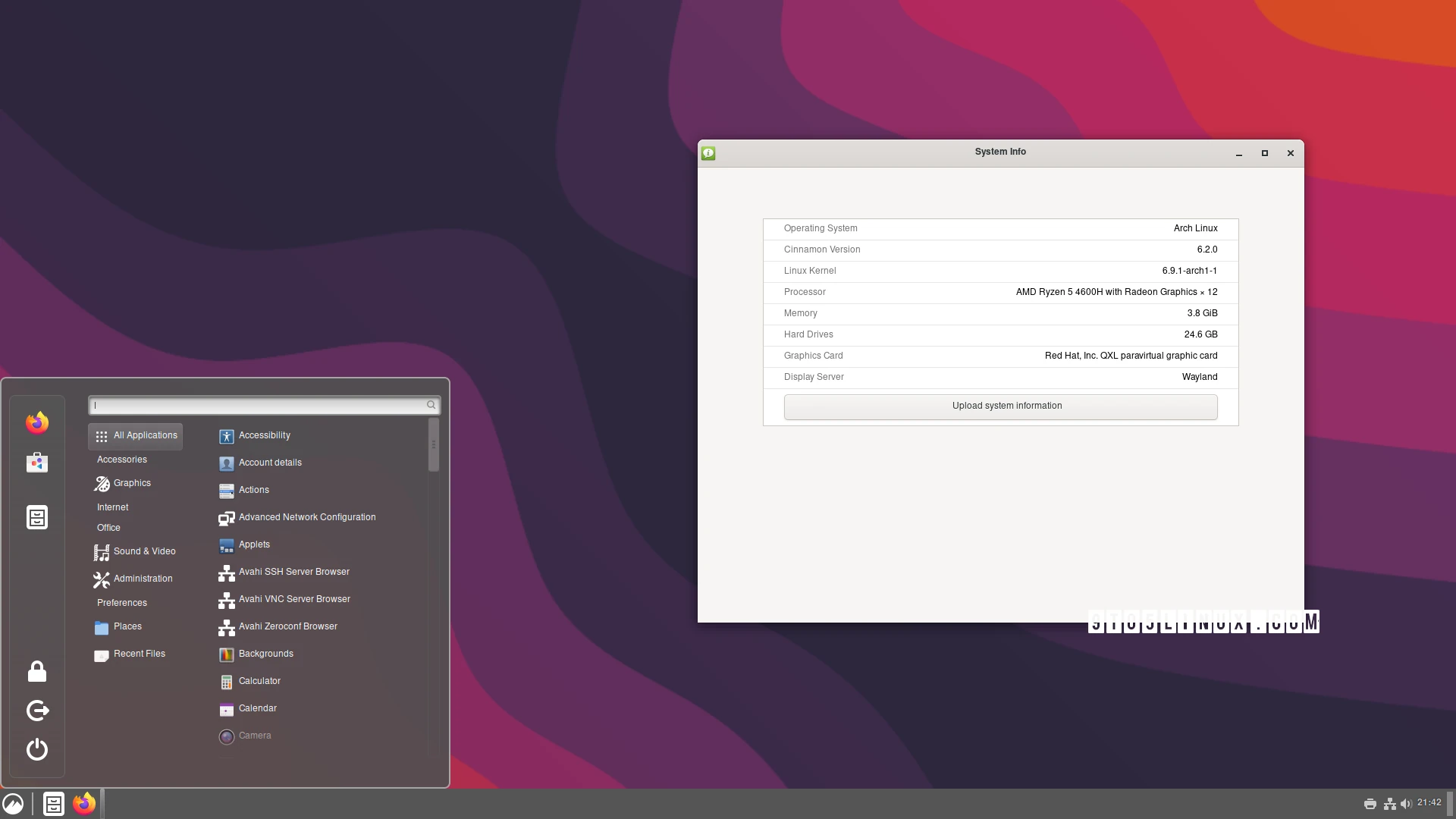

Linux is a multitasking and multi-user operating system for business, education and personal programming. Linux belongs to the UNIX family of operating systems. Linux supports a wide range of software packages from TeX to X Windows, GNU C/C++ compilers, and TCP/IP protocols. It is a flexible implementation of the UNIX operating system that is freely distributed under the GNU General Public License. In its original form, it was created by Linus Torvalds as a version of UNIX for IBM-compatible personal computers. Linux can turn any of the above-mentioned personal computers into a workstation. Businesses install Linux in networks of machines and use the operating system for data processing in finance, medicine, distributed processing, and telecommunications.
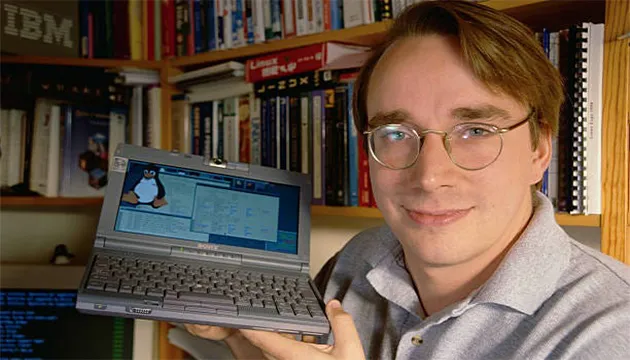
The author of the Linux operating system
In 1991, Linus Torvalds, a Finnish student, became extremely enthusiastic about the idea of writing a UNIX-compatible operating system kernel for his personal computer with a processor of the widespread Intel 80386 architecture. The prototype for the future kernel was the MINIX operating system, which was loaded from floppy disks and fit into the very limited memory of a personal computer at that time.
MINIX was created by Andrew Tanenbaum as a training operating system demonstrating the architecture and capabilities of UNIX, but unsuitable for full-fledged work from the point of view of a programmer. It was Linus Torvalds who wanted to create a full-fledged kernel for his PC. He named his kernel freax, but later it was changed by the owner of the ftp server to Linux – a hybrid of the creator’s name and the word UNIX.
The global computer networks Usenet and the Internet played a crucial role in the development of Linux. In the early stages, Linus Torvalds discussed his work and difficulties with other developers in the teleconference comp.os.minix on the Usenet network dedicated to the MINIX operating system. Linus’s key decision was to publish the source code of the low-performance first version of the kernel under the GNU GPL. Thanks to this and the increasingly widespread Internet, many people on the Internet were able to compile and test the kernel on their own, participate in discussions and bug fixes, and send corrections and additions to Linus’ source code.
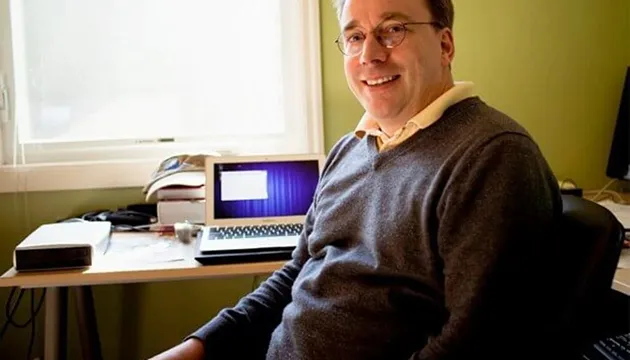
‘For example, I used to dream. When I was a teenager, I wanted to become a famous scientist. Like Albert Einstein, only the best. And who doesn't want to? If not a scientist, then a race car driver. Or a rock star. Or Mother Teresa. Or the President of the United States.’
Linus Torvalds
The Linux kernel
On 5 October 1991, Linus announced the first ‘official’ version of Linux, version 0.02. Again, this was seen as the creation of some kind of hacker system. The focus was on creating the kernel. No issues of user support, documentation, replication, etc. were even discussed. It seems that even today the Linux community considers these issues secondary to ‘real programming’ – kernel development.
After version 0.03, Linus jumped in the numbering to version 0.10, as many people started working on the project. After several version revisions, Linus assigned the next version the number 0.95 to reflect his impression that an ‘official’ version was soon to be released. This was in March 1992. Approximately a year and a half later, in December 1993, the kernel version was still Linux 0.99.pl14 – asymptotically approaching 1.0. And now the kernel version is 3.4 (stable build of 20 May 2012).
The kernel can emulate 387-FPU instructions itself, so that systems without a coprocessor can execute programs that rely on it (i.e., floating point).
The kernel also supports a universal memory pool for user programs and the disk cache. In this case, the entire memory can be used for the cache, and vice versa, the cache is reduced when large programs are running.
From the very beginning, Linux has been distributed as free software, meaning that it is practically free for users (in most cases, you only have to pay for a CD-ROM with software or for Internet access traffic to get it).
‘Given the specifics of a typical internal corporate mechanism, a technical manager must have a strong personality. He or she must love working via email and be able to remain neutral. I would like to avoid the word ‘intermediary’ because it implies the existence of two camps: external and internal. And this should not be the case.’
GNU and Linux
However, just as you can’t make an operating system without a kernel, the kernel is useless without utilities that would use its capabilities. Thanks to the GNU project, Linus Torvalds was immediately able to use free utilities with Linux: bash, the gcc compiler, tar, gzip, and many other well-known and widely used programs that could work with its UNIX-compatible kernel. Thus, Linux immediately found itself in a good environment and, in combination with GNU utilities, was a very interesting environment for software developers even at an early stage of its development.
The compatibility of Linux and GNU utilities was due to the fact that both were written with the same standards and practices in mind. However, within the framework of this practice (i.e. in the presence of many different UNIX systems), there was still a lot of room for incompatibility and different solutions. Therefore, at the initial stage of kernel development, each GNU application that worked on Linux was another achievement for Linus. The first were bash and gcc. Thus, the combination of GNU and Linux made it possible to create a free operating system, but it did not constitute such a system by itself, because Linux and various GNU utilities remained disparate software products written by different people who did not always take into account what others were doing. And the main property of any system is the consistency of its components.
Linux provides a complete set of TCP/IP protocols for networking. It supports the full range of TCP/IP clients and services, such as FTP, telnet, NNTP and SMTP.
‘Commercial success hasn’t ‘spoiled’ Linux as much as it has changed me. I wouldn’t dare say I’ve grown up as a result – having three children has had more of an impact on me in that regard – I’ve just changed. In many ways, I have become better, but at the same time I have lost some of my naturalness. Linux used to be intended only for specialists – programmers swam in it like fish in water. It was a quiet place where only technology mattered and nothing else.’ System characteristics’.
About Linux distributions
After a certain period of development, a number of the most important GNU utilities were already running stably on Linux. A compiled Linux kernel with a small set of compiled GNU utilities formed a set of tools for a software developer who wanted to use a free operating system on his or her personal computer.
When the task of getting a computer with the GNU/Linux system running on it permanently became popular and widespread, developers at the universities of Helsinki and Texas created their own sets of floppy disks from which the compiled kernel and basic utilities could be written to a hard drive and then loaded directly from it. These sets of floppy disks became the first prototypes of modern Linux distributions – software packages that can be used to get an operating system running on your computer.
Despite the fact that with the advent of the first Linux distributions, installing Linux no longer requires compiling all programs from source code, the use of Linux remained the domain of developers: at that time, the user of the operating system with it could do almost exclusively programming.
The benefit of an operating system consisting entirely of free software is obvious: those who build this system do not have to pay anyone for the programmes included in it. Moreover, further development and updates of existing applications are also carried out by the community of developers absolutely free of charge, without the need to pay employees to do so. Thanks to Red Hat, the RPM package format has become very widespread in the Linux community.
Almost simultaneously with Red Hat, the Debian project appeared. Its goal was similar: to create a complete distribution of Linux and GNU free software.
Nowadays, the Ubuntu project is gaining popularity.